
by Sarah Karwisch
A Victorian mourning mask. A sailor’s astrolabe. A bone flute carved from a long-dead animal. Walk into any museum, and you’ll find a story waiting in a glass case. These aren’t just relics. They’re potential story engines, packed with history, emotion, and unanswered questions.
For speculative fiction writers, artifacts are a secret shortcut. They carry the weight of the past, the texture of life, and the hints of worlds that might have been. Change just one variable (what they do, who uses them, or when they were invented) and suddenly you’re holding the seed of an alternate history, a piece of magical technology, or the central conflict of your next story.
Artifacts spark imagination because they are both specific and incomplete. They tell a story in fragments: a maker’s mark, a repair, a worn edge. These fragments invite writers to step in and fill the gaps, blending historical truth with creative, fantastical possibility.
How Objects Spark Stories
Take the Victorian mourning mask, a plaster mold of a loved one’s face. Historically, it was a way to preserve memory and commemorate the dead. Families would display the masks, keeping them as reminders of loved ones lost.
In a speculative world, what if the mask didn’t preserve a face but the grief itself? Each one binds to its wearer, forcing them to carry the full weight of mourning until the mask is passed on. Some families never remove them, while others sell their grief masks to collectors. Now you’ve got a story about a black-market trader who discovers a mask that shouldn’t exist: their own.
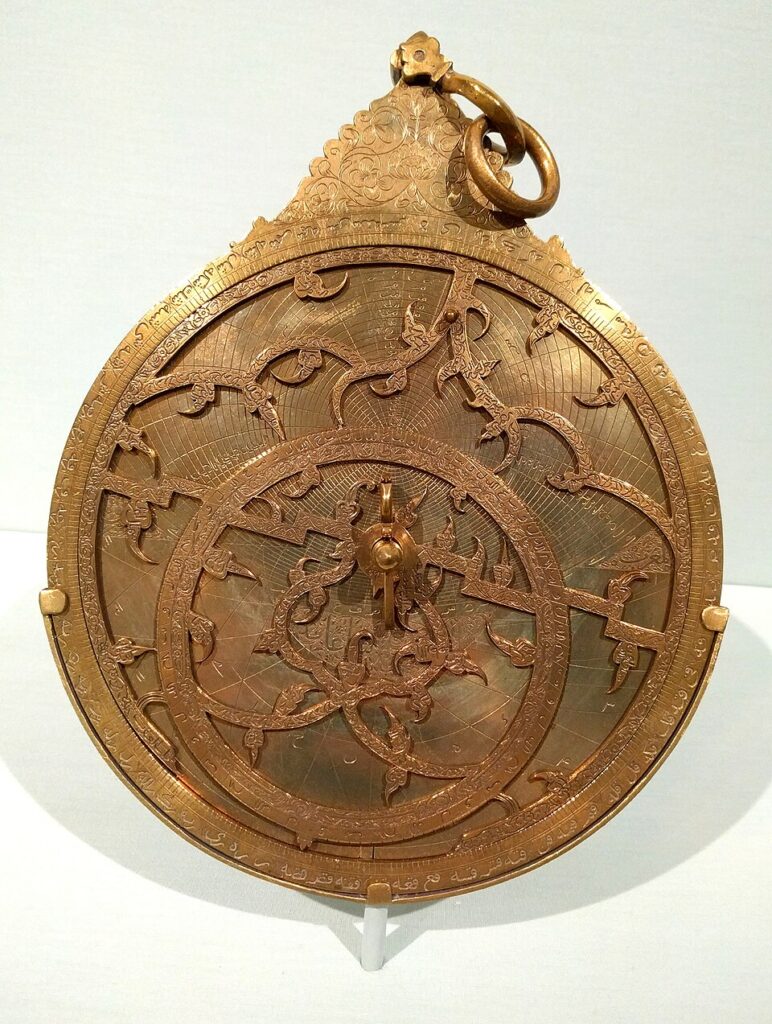
Or consider a bronze astrolabe, an ancient navigational tool. Historically, sailors used it to chart the stars, guiding voyages across seas they could not fully map.
In a speculative story, imagine if it mapped not stars but possible futures. Navigators become prophets, and voyages transform into intricate gambles with destiny. A fleet’s captain might plot a course to avoid disaster, only to discover that following the “best” future has unforeseen costs. Now you have characters who must make moral choices under the pressure of cosmic uncertainty.
Even something as seemingly simple as a bone flute can carry remarkable possibilities. In reality, these flutes were among the oldest known instruments, carved from animal bones and used for music, ritual, and even communication.
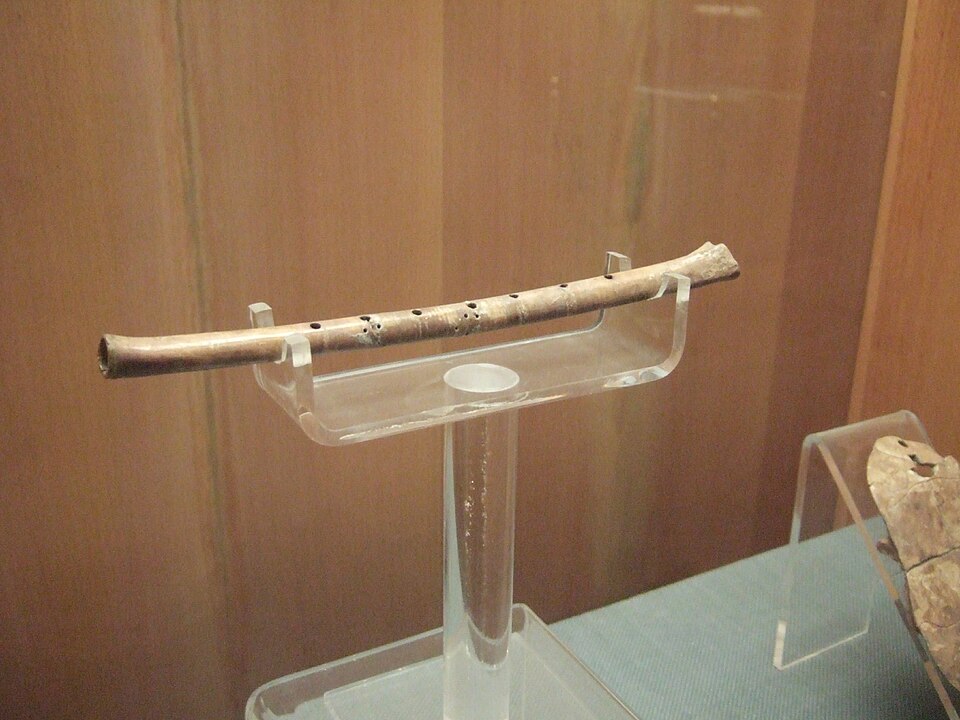
In a speculative world, the flute could be a literal key. Perhaps each note opens a hidden doorway, unlocks ancestral memories, or resonates with supernatural forces. Who is allowed to play it? Who guards the rarest notes? Now your wandering musician, carrying the last surviving flute of its kind, is chased not for her song but for the instrument’s power. The object becomes a story catalyst: The music dictates the plot, the chase drives character decisions, and the world itself bends to the artifact’s magic.
These examples illustrate how artifacts can anchor character, plot, and worldbuilding simultaneously. They give you something to hold on to in your story while the speculative elements ripple outward, shaping culture, institutions, and conflict.
From Case to Cosmos
So how do you move from an interesting artifact to a usable story? It doesn’t need to be complicated. Start by observing, asking “What if?” and tracing the consequences. Here’s one way to approach it:
Next time you come across a curious object, run it through these quick steps:
- Notice the oddity. Pick one detail that stops you in your tracks: a crack, an engraving, unusual wear. Write down everything you see without interpreting it yet.
- Change one rule. What if the artifact behaves differently than history allows? Maybe it’s magical, maybe technological, maybe it appeared centuries early or late.
- Follow the ripples. Ask yourself: Who uses it? Who profits? Who suffers? What institutions or cultures rise or fall because of it?
- Plant it in story soil. Write one sentence: When [artifact] does [new thing], a [character] must [goal] before [cost] destroys [stake]. This becomes your seed.
By following this process, even mundane items can turn into story engines. The specificity of real objects gives your world texture and your characters tangible stakes, while the speculative twist lets you explore the “What could be?”
What Is Provenance?
Another powerful way to generate ideas is to tweak an artifact’s provenance: the story of where it came from, who owned it, and how it ended up in your hands. Perhaps the bone flute wasn’t discovered in a simple burial site but in the ruins of a sunken city, or the astrolabe wasn’t passed down through sailors but stolen from a secret guild of astronomers.
Changing the provenance allows you to rewrite history. It can alter which cultures interact with it, what myths surround it, or who seeks it out. Suddenly, the artifact isn’t just an object. It’s a thread connecting people, places, and power struggles across time, giving your story built-in conflict and intrigue.
12 Prompts for Artifact-Driven Stories
- Pick an object and describe 10 details without thinking too hard. Then imagine one is magical or futuristic.
- Invent a hidden history for an artifact: who owned it, who wanted it, and why it disappeared.
- Take an object and imagine its use reversed or twisted. What happens when it does the opposite of its purpose?
- Choose an artifact and imagine one rule change: bigger, smaller, earlier, later, magical, or technological. How does the world react?
- Write a scene where a character discovers an artifact with unexpected powers. What do they do?
- Assign your artifact two roles: problem and solution. Write one paragraph exploring each.
- Sketch a diagram with five spokes: Character, Culture, Economy, Institutions, Landscape. Add one unexpected outcome to each.
- Imagine a black-market variant of the artifact. Who trades it, and what makes it dangerous or rare?
- Change the provenance of an artifact: different era, culture, or origin. How does that alter its significance?
- Write a first-encounter scene: Your protagonist touches the artifact for the first time. Include sensory details and immediate stakes.
- Let the artifact “speak” in a short monologue. What secret, warning, or memory does it reveal? Is it sentient or just a recording?
- Draft a one-sentence story prompt using the template: When [artifact] does [new thing], a [character] must [goal] before [cost] destroys [stake].
The next time you wander through a gallery, scroll a digital archive, or even dig through a flea market, don’t just look and listen. Let the objects surprise you, make you curious, and push your imagination. That carved ivory statuette, chipped teacup, or royal jewel could hold the path to a whole new world, a character you can’t forget, or a conflict that refuses to let go. Treat them like little puzzle pieces; twist them, turn them, see where they lead. You’ll unlock stories you never expected.
Explore more articles from Writing from History
 Sarah Karwisch is a mom, gamer, and writer who helps authors turn their messy first drafts into polished novels as a beta reader and developmental editor. She holds a degree in PR with a minor in Professional Writing and loves exploring the intersections of creativity, storytelling, and everyday life. Learn more at www.karwischcreative.com.