
by Ben Nadler
Although Abraham Lincoln’s life was cut short by a pro-Confederate terrorist in 1865, he has found continuing afterlives as a speculative fiction character trope. Over the past century, this figure has appeared in works by a range of writers, including Vachel Lindsay, George Saunders, Philip K. Dick, Rod Serling, and Tony Wolk.
Each of these works contains a different Abraham Lincoln. They are not the same character. Still, these Lincolns share a common origin, as each of their authors has found a way to use speculative fiction conceits to build their own Lincoln from historical record. What’s more, these conceits offer ways to displace Lincoln from history and bring him into contact with different times and realities. These encounters provide readers and writers of speculative fiction with new understandings of the past, present, and future of this country.
Why Lincoln?
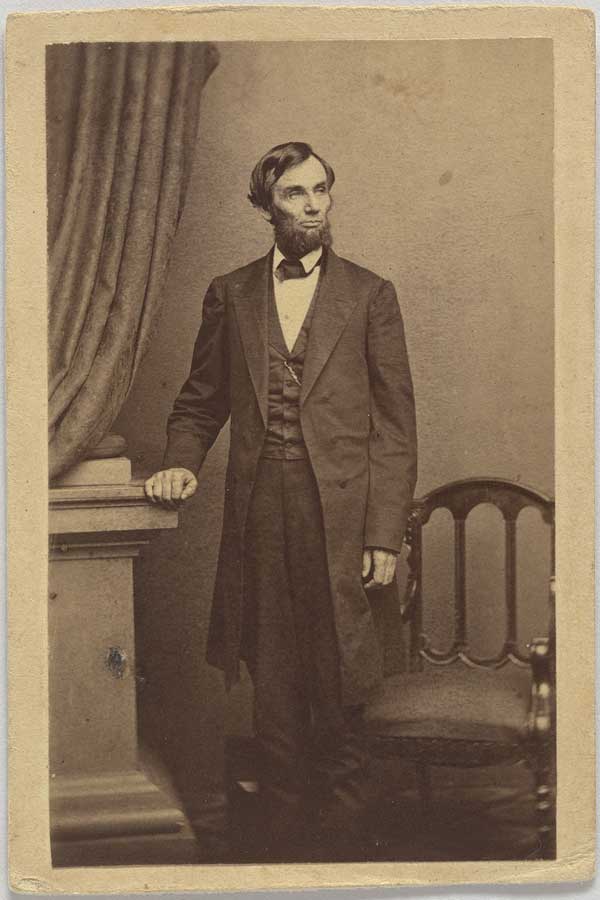
It is not incidental that Lincoln, of all US historical figures, has taken on this role. “The Great Emancipator” has long functioned as a liberatory figure in American culture. Historian Nina Silber notes that during the Great Depression, Lincoln “offered an imaginative repository” for hopeful responses to the era’s crises. He has filled a similar function for authors in the intervening decades.
Exploring how different writers have deployed Lincoln in their fictional narratives provides an understanding of Lincoln’s enduring cultural role. At the same time, comparing uses of this character trope by very different authors also provides insight into methods available to speculative fiction writers when working with the past. In these Lincoln examples, we see how the genre devices of hauntings, robotics, and time travel can all be used to access history.
To and From the Cemetery
In his 1914 poem “Abraham Lincoln Walks at Midnight,” Vachel Lindsay writes: “Here at midnight, in our little town / A mourning figure walks, and will not rest.” The long-dead president, unable to sleep in his tomb, walks into downtown Springfield, Illinois. The current unfolding of World War I troubles him: “It breaks his heart that kings must murder still.”
A century later, the prominent slipstream writer George Saunders uses a similar conceit in his award-winning 2017 novel Lincoln in the Bardo. Saunders’s Lincoln leaves the White House in 1862 to enter a Georgetown cemetery inhabited by ghosts. The most recent arrival is Lincoln’s 11-year-old son Willie, killed by typhoid. The grieving president visits Willie’s crypt, holding him one last time. The ghosts observe the president throughout the night. Ultimately, the spirit of a formerly-enslaved man inhabits Lincoln’s body.
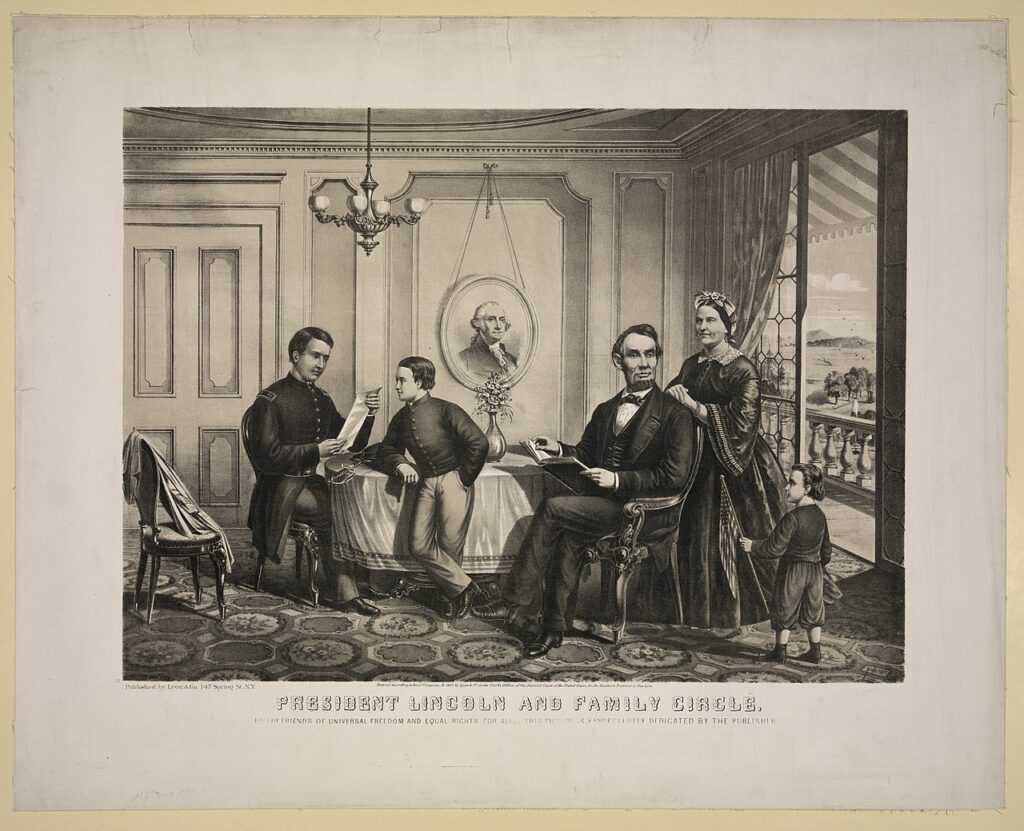
A key problem that a fiction writer working with a well-known historical figure has to address is how to build an original character from historical records. Saunders has two solutions. In the cemetery chapters, the ghosts perceive Lincoln without preconceptions, such as when one observes: “An exceedingly tall and unkempt fellow was making his way toward us through the darkness.” In other chapters, however, Saunders leans into the textual record, montaging historical quotes (actual and fictive). For example, one chapter is constructed entirely of negative statements made about Lincoln by his contemporaries. This move plays with the tension between the historical Lincoln, the myth of Lincoln, and Saunders’s own character of Lincoln.
Your Next Stop: The Twilight Zone!
Saunders’s fiction is indebted to the uncanniness of the original Twilight Zone TV series. Bardo, in particular, recalls the 1961 episode “The Passerby”, which depicts Northern and Southern soldiers trudging home at war’s end. The protagonist is a Confederate who comes to realize—in a classic Twilight Zone twist!—that he and everyone else on the road were killed in the war. Eventually, Lincoln himself rides down the road and tells a resistant Confederate widow, “I’m dead too. I guess you might say I’m the last casualty of the Civil War.” The conflict can finally be laid to rest.
“The Passerby” aired as the Civil Rights Movement was gaining ground. Host and scriptwriter Rod Serling comments on the 20th-century end of segregation through his 19th-century characters, just as Lindsay comments on the violence of WWI through his wandering Lincoln. Because Serling’s Lincoln is a ghost who now exists outside mortal time, he can speak to audiences in different eras.
Mechanical Statesmen
Not all speculative depictions of the Abe Lincoln character rely on the supernatural. In Philip K. Dick’s 1972 novel We Can Build You (originally serialized in Amazing Stories as A. Lincoln, Simulacrum), Lincoln and his Secretary of War, Edwin Stanton, are recreated as androids by an electronic piano company. This connects to Dick’s use of androids in other works, notably Do Androids Dream of Electric Sheep (1968), as well as to the real-world Lincoln robot Disney debuted at the 1964 World’s Fair.
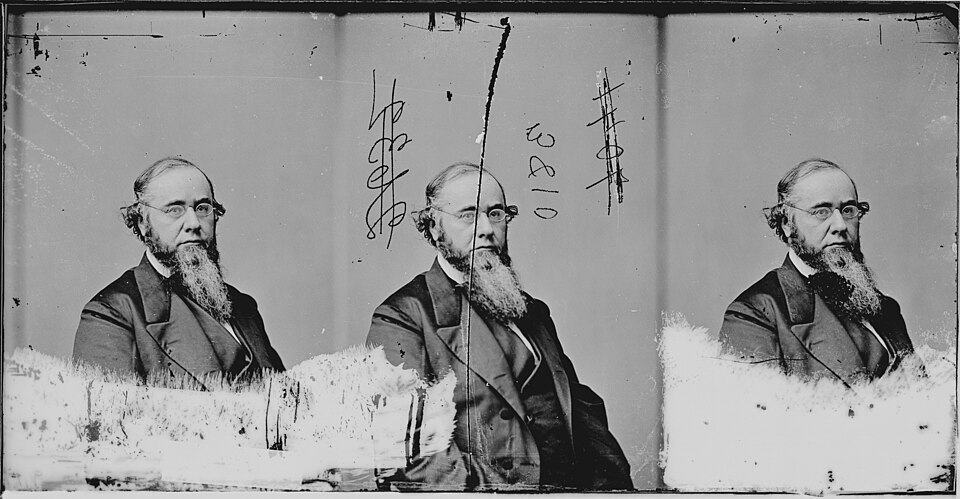
Dick’s near-future novel touches on issues such as housing justice, corporate power, and lunar colonization, but its primary subject is mental illness (particularly schizophrenia). This concern is embodied in the robotic Lincoln, who exhibits the president’s notorious “melancholy.” “Lincoln was this way,” argues one of the android’s engineers. “He had periods of brooding.” Like Saunders’s, Dick’s depiction of historical figures draws directly on historical record: The androids are programmed with punch-tapes of real sources, such as Carl Sandburg’s exhaustive Lincoln biography.
Fourscore and Seven Years into the Future
Rather than androids, Tony Wolk’s 2004 Abraham Lincoln: A Novel Life (the first in a trilogy), uses another established sci-fi mechanism to bring Lincoln into the 20th century: time-travel. Wolk is not as well-known as Dick, but he has his own role in sci-fi history, such as co-teaching workshops with Ursula K. Le Guin.
At the beginning of Wolk’s novel, Lincoln finds himself transported in the middle of the night from 1865 Washington, D.C. to 1955 suburban Chicago. “Suddenly,” Wolk writes, “there he was, on Howard Street, reeling, as if he were perched on the edge of a cliff, peering over.” As in many time-travel novels, such as Octavia Butler’s Kindred, the temporal leap isn’t fully explained, but the reader follows along for the journey.
The time-travel allows Lincoln to experience a few last moments of reprieve before his assassination. It also allows him to perceive Cold War America. Early on, he tries to wrap his mind around the atomic bomb by comparing it to a Civil War battle: “He was picturing the disaster with the Petersburg mine, but now above ground and engulfing a whole city, a Philadelphia, a Boston.”
To the Ages
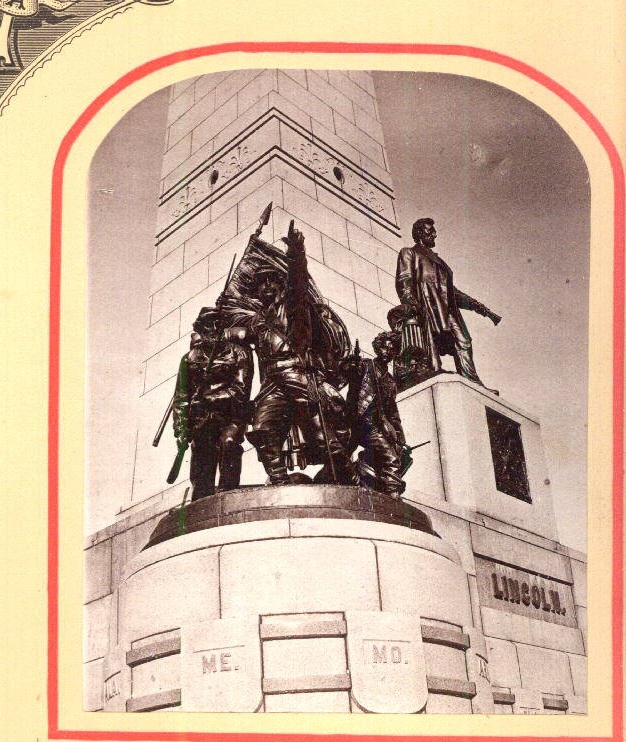
As we enter new eras of American political and social life, the Lincoln trope will no doubt continue to be deployed by authors trying to make sense of our conditions. We will have to see what new Lincolns are brought to life in the decades to come. When the historical Lincoln was assassinated, Stanton famously stated, “Now he belongs to the ages.” Through his role in speculative fiction, he truly does.
Explore more articles from Writing from History
 Ben Nadler is a writer working between New York City and the Philadelphia area, where he teaches English at Widener University. He is the author of The Sea Beach Line: A Novel and Punk in NYC’s Lower East Side 1981–1991. His next novel, Prairie Ashes, is forthcoming from American Buffalo Books. More at bennadler.com.